

Imagine this: the renovation is finished, the money has been paid, but the contractor says painting the walls was not included in the price. Or that the deadline was only "approximate." Situations like this are common, and they usually happen not because of bad faith, but because the agreement was never put in writing.
To make renovation agreements clearer, easier to review, and easier for both sides to understand from the very start, Doqubit has partnered with GetaPro. From now on, the agreement can be turned into a clear, structured document the moment a service provider is selected and confirmed on GetaPro. No extra steps, no searching for contract templates, and no guessing what else should be included, because Doqubit guides the process logically, step by step.
How the Doqubit and GetaPro partnership improves renovation agreements
GetaPro is a widely used platform in Latvia where users can find, compare, and choose service providers in one place, including a broad range of renovation services from cosmetic repairs and finishing work to plumbing and other home improvements.
Until now, agreements about renovation work often stayed in chat messages or verbal conversations. That might seem enough at first, but later it can cause confusion. Now an important next step has been added to that process.
Both when receiving quotes and while chatting with a service provider on GetaPro, there is now a button that takes users directly to Doqubit. There, a renovation contract can be created at the exact moment the agreement is reached. This helps preserve the context of the discussion and move straight to a clear, structured agreement, while all the details are still fresh and understood by both sides.
In practice, this means:
- there is no need to search the internet for contract templates
- there is no need to guess which clauses should be included
- there is no need to worry that something important has been missed.
With its guided question flow, Doqubit helps users organize the agreement step by step in a logical, easy-to-follow structure. The result is a document that reflects the real situation and the actual agreement, not a generic template that has to be rewritten manually.
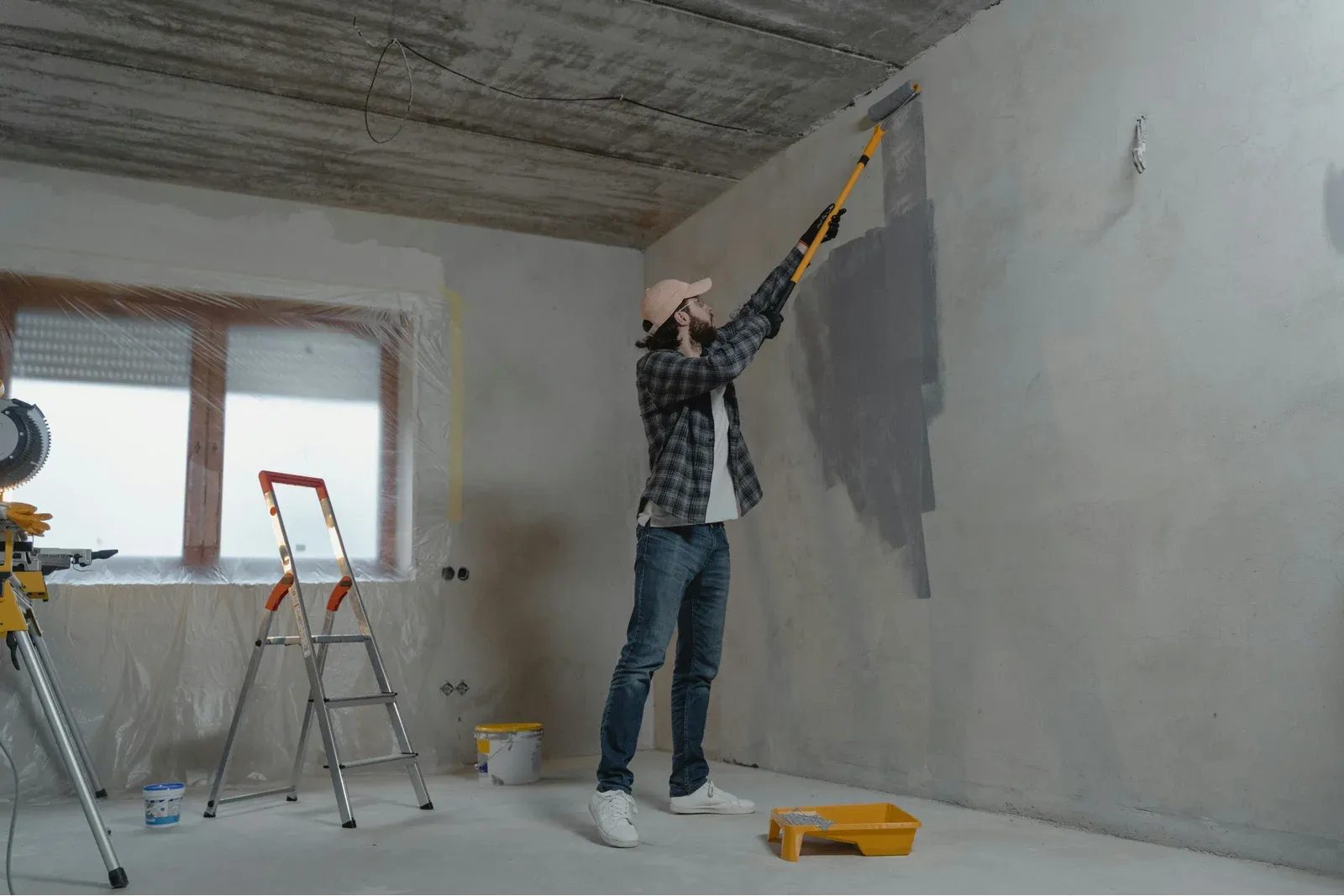
Why renovation work needs a written contract
It often seems that a contract is only necessary for large and complex projects. If the job is small or the contractor seems trustworthy, a verbal agreement or chat exchange may feel sufficient. In practice, however, this is exactly when misunderstandings arise most often, because details are never fully discussed or are interpreted differently by each side.
A written renovation agreement is not just a formality; it is a simple way to make sure from the outset that both sides understand the same thing.
1. Scope of work without clear boundaries
Phrases such as "full renovation" or "plumbing work" may sound clear, but each side may understand them differently. Does the price include materials? Is demolition and debris removal included? Will the finishing be restored after the work is completed?
Without clear written confirmation, these questions often surface only during the project, when it is already too late to resolve them calmly. A document makes it possible to define the scope of work precisely, so there is no guesswork about what is included and what is not.
2. Deadlines become real only when they are documented
A verbal agreement on timing is often flexible and dependent on circumstances. From the client’s perspective, that can mean not knowing when the work will actually be finished.
A written document makes it possible to set specific start and end dates and agree on what happens if the work is delayed. This helps both sides plan their next steps and reduces stress.
3. Payment terms without misunderstandings
Money matters are one of the most common reasons for disputes during renovation work. When is the advance payment made? At what point is the final payment due? Are payments tied to specific milestones or completed work?
If this is not clearly defined, each side may follow its own assumptions. A written agreement settles these questions from the start, making the payment process transparent and predictable.
4. Work acceptance and recording defects
The completion of renovation work is often just as important as the start. A handover and acceptance certificate makes it possible to record the condition in which the work is delivered to the client.
This makes it possible to:
- clearly confirm what has been completed
- record any defects that are found
- agree on deadlines for fixing them or on the next steps
Without such a document, situations can arise where it later becomes difficult to prove what exactly was done and what the parties had agreed to.

Which renovation documents are available on the GetaPro platform
As part of this partnership, users get access to documents that cover the entire renovation process, from the initial agreement all the way to final handover. This means there is no need to think through every stage separately: the structure is already in place, and it only needs to be completed for the specific situation.
Fixed-price renovation contract
This type of contract is suitable when the total price of the work can be agreed in advance. It is often the right choice for clearly defined projects where the scope of work is already known.
The document is structured to include:
- a description of the work
- deadlines
- payment terms
- the parties’ obligations and the details of the agreement.
This helps both sides agree on the essentials from the start and avoid surprises during the work.
Renovation contract with fixed unit pricing
This contract is suitable when the exact scope of work cannot be fully determined in advance, for example when work is priced by square meter, by hour, or by other measurable units.
In this case:
- a price is set for a specific unit
- the final amount is calculated according to the actual quantity completed
- the agreement still remains clearly structured.
This preserves flexibility while still ensuring clear terms.
Handover and acceptance certificate for renovation work
This document closes out the entire process. It helps record the result of the work at the moment it is handed over to the client.
The document makes it possible to:
- clearly confirm the completed work
- record any defects that are found
- agree on deadlines for fixing issues or on further action.
This is an important step to ensure the agreement covers not only the performance of the work, but also its final result.

Why use Doqubit to create renovation documents
There are countless contract templates online, but in practice they often raise more questions than they solve. Templates are usually too generic, do not reflect the specific situation, and often fail to capture what the parties actually agreed on. As a result, users are left to decide what to change, what to add, and whether something important has been missed.
Doqubit takes a different approach: it helps not only create the document, but also structure the agreement itself.
Guided process
Instead of starting with a blank document, the user is guided through a logical sequence of questions. Each step helps clarify the situation, from the type of work to payment terms and deadlines. As a result, the document is created in a structured way rather than chaotically.
No need to guess what information to include
One of the biggest challenges is understanding what a contract should actually include. Doqubit does that work for the user by helping structure the agreement so that the most important points are thought through from the beginning.
Create your document without registration
Start creating your document without registering an account. Answer clear questions, and Doqubit will help prepare a document for your situation. The document can be created in just a few minutes, then edited and shared with the other party directly on the platform.
Suitable for different parties
The renovation documents are designed so they can be used by both private individuals and service providers, including limited companies, sole traders, and self-employed professionals. This makes it easy to formalize an agreement regardless of the cooperation model.
Fast and easy to understand
The process is built in clear, simple language so it can be used even without prior experience with contracts.
Fewer misunderstandings during the process
A clearly documented agreement means fewer questions during the work, fewer misunderstandings, and simpler communication between the parties. That makes it easier to focus on the work itself instead of resolving confusion.
Renovation is an investment of money, time, and trust. A clearly documented agreement helps make the whole process calmer, easier to understand, and more predictable for both sides.