
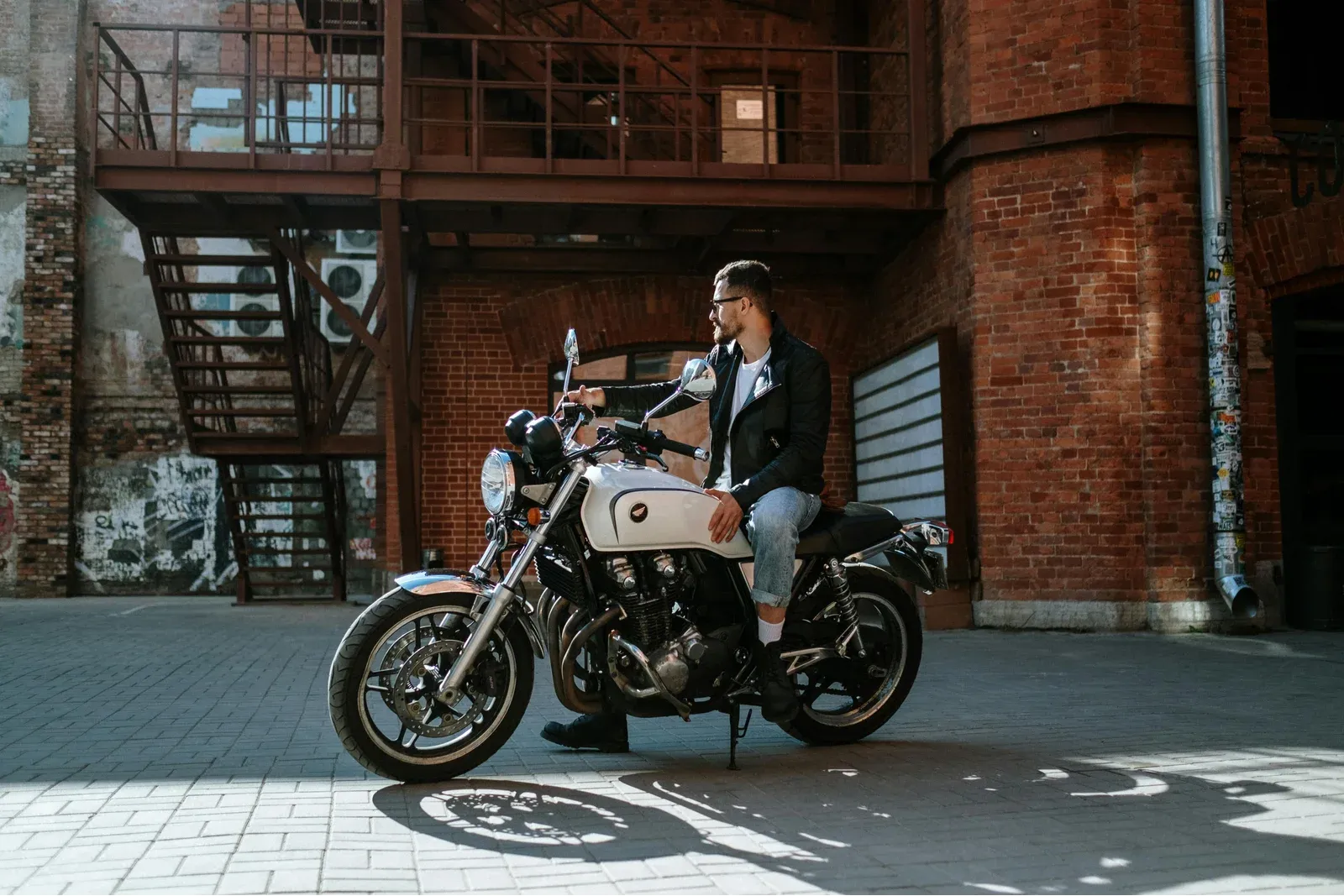
The motorcycle market in Latvia becomes especially active in spring, and many transactions take place between private individuals. This often means a better price, but also more responsibility for the buyer, with no return option and no additional protection from a professional seller. Buying a motorcycle from a private person in Latvia is common, but it requires a clear understanding of the transaction process and the documents involved. Most problems after buying a motorcycle do not arise because of bad faith, but because the inspection was superficial, the motorcycle documents were incomplete, or an important agreement remained only verbal.
In this article, we will look at seven steps that most often describe the motorcycle buying process in Latvia, from the first contact to registration with CSDD: what to check during the inspection, which motorcycle documents are needed, what mistakes are most common, and how Doqubit can simplify document preparation.
Transaction structure: seven steps from first contact to motorcycle registration
Buying a motorcycle from a private person is not just agreeing on a price and signing documents. It is a step-by-step process where the buyer needs to follow each stage carefully, because this determines how clear, safe, and correctly documented the whole transaction will be. The more thoughtfully each step is handled, the lower the chance of later confusion about the motorcycle’s condition, accessories handed over, payment, or document content.
Below is the sequence in which a motorcycle purchase most often happens in practice, starting with the first communication with the seller and ending with vehicle re-registration at CSDD. Each of these steps is closely connected to the next one: if one stage is skipped or handled carelessly, it can affect the entire course of the transaction.
Step 1: reviewing the listing and asking the first questions
A motorcycle purchase starts with the listing, and this is where the first impression of the transaction is formed. A quality listing with several photos, a clear description, and honestly stated defects usually suggests a more transparent seller. A generic description with phrases such as “good condition” means more questions should be asked before meeting.
Before inspecting the motorcycle, it is worth clarifying the actual mileage, service history, possible accidents or major repairs, current technical issues, and available documents. Precise answers allow the conversation to continue with more confidence, while evasive answers are a signal to be more cautious.
At this stage, no documents are signed yet, but important statements should be kept in written messages or noted down so they can be referred to later.
Step 2: motorcycle inspection and document check
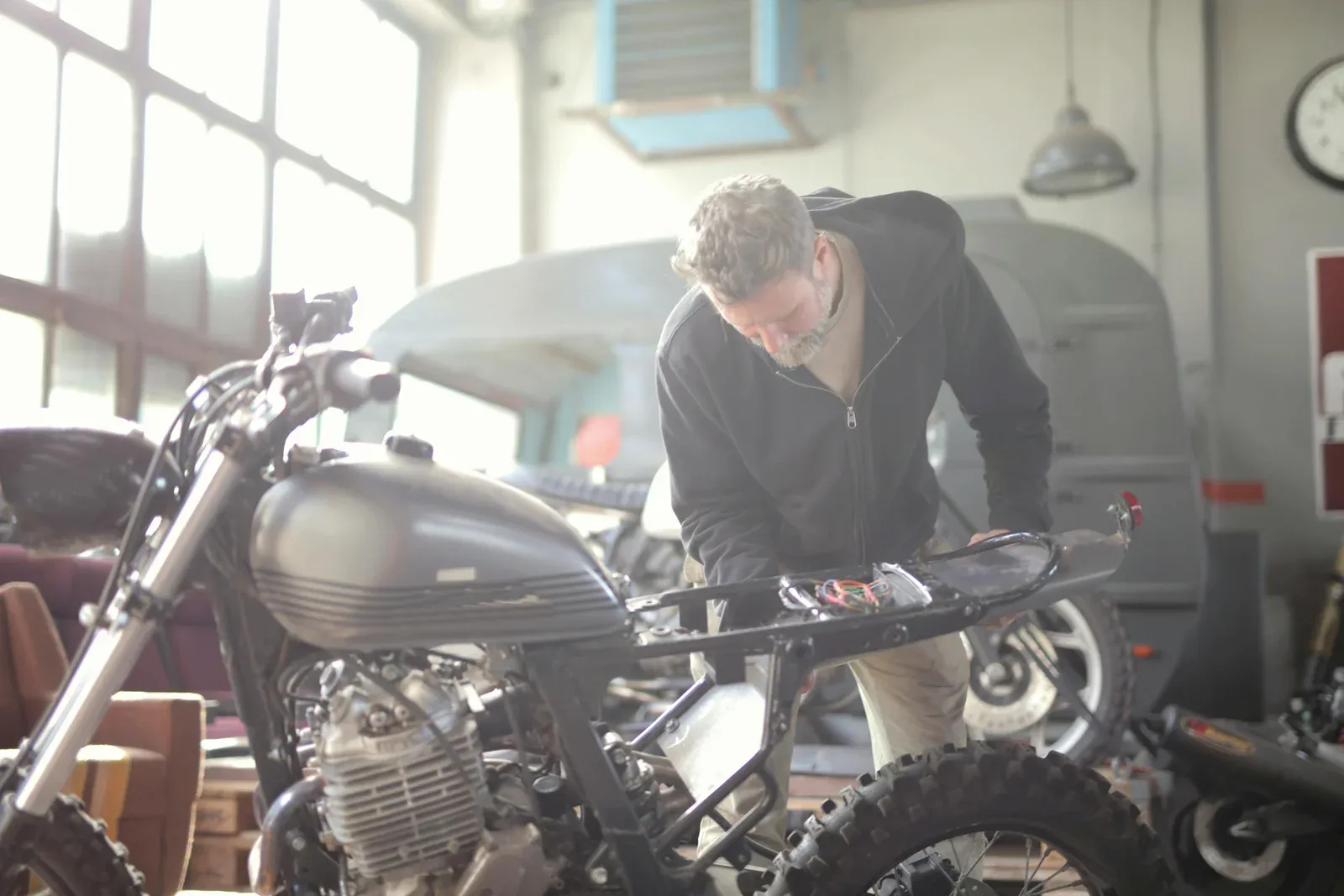
The motorcycle inspection is the stage where the buyer obtains most of the information that will later appear in the documents. What is noticed and recorded during the inspection with notes or photos becomes a valuable point of reference if questions later arise about the motorcycle’s condition at handover. What is noticed but not documented often remains without proof in practice and therefore loses its value.
Visual inspection
A systematic visual inspection means carefully looking at the motorcycle from every side: front, sides, rear, and, as far as possible, underneath. Scratches, dents, or damaged plastic parts may indicate falls or other damage, even if they were not mentioned in the conversation. Uneven paintwork or irregularities around the frame can also point to more serious repairs that are not immediately obvious.
It is important not only to notice these details, but also to record them specifically. General wording such as “minor wear” says very little in practice. It is much more useful to write down exactly where the damage is, how large it is, and what it looks like. This approach later helps clearly understand the condition in which the motorcycle was purchased.
Technical inspection
Even without in-depth technical knowledge, several important parameters can be assessed. It is advisable to check the oil, brakes, chain or belt, tires, electrics, and engine sound. It is just as important to listen to the engine when starting it and pay attention to unusual noises.
If the buyer is not confident in their technical knowledge, it is entirely reasonable to involve someone who can objectively assess the motorcycle’s condition. This additional check can often help avoid much larger expenses in the future.
Document check
The document check is no less important. The data in the registration certificate, VIN code, engine number, colour, and motorcycle type should match what is visible on the vehicle itself. The VIN code should be checked in at least two places: in the registration certificate and on the motorcycle frame.
Any mismatch or visibly damaged VIN code is a serious warning sign that requires further explanation before continuing with the transaction. If service history is available, it gives additional clarity about motorcycle maintenance and helps assess whether the declared mileage is realistic.
Step 3: agreements to settle before preparing documents
Once the inspection is complete and the buyer is confident the transaction is worth continuing, the next step is to clearly and unambiguously agree on the transaction terms before any documents are prepared. This is the stage where the verbal agreement becomes structured information that will later be included in the contract and other documents, so precision is especially important here.
The agreement is not limited to the final price. It is just as important to agree on the payment method, whether it will be a bank transfer, cash, or a combination of both, as well as the exact handover time and place. The parties should also specify exactly what is handed over with the motorcycle, such as spare keys, protective equipment, spare parts, or service documentation. If defects or wear were identified during the inspection, it is important to agree that both sides acknowledge and understand them in the same way.
Step 4: creating the motorcycle purchase and sale agreement
Motorcycle purchase and sale agreement forms the legal basis for a transaction between private individuals. It states who sells, who buys, for what amount, and under what conditions, as well as what information about the motorcycle has been mutually confirmed. It is not just a formality, but a clear framework for the agreement that both parties can refer to if questions arise.
The agreement usually includes the personal data of both parties, motorcycle identification information, make, model, VIN code, registration number and year of manufacture, the transaction amount and payment procedure, as well as information about known defects. If time is expected between signing and handover, this should also be stated in the agreement. If you want to understand in more detail what information should be included in the agreement, to avoid misunderstandings, we have covered this topic in a separate article.
In practice, the challenge is often not signing the agreement, but preparing it correctly. When searching for templates online, important information is often omitted or unsuitable wording is used. Doqubit offers a structured solution: the motorcycle contract is prepared through a guided process, by answering specific questions step by step. This helps ensure that everything important is included.
Importantly, the agreement does not replace the handover and acceptance certificate. The agreement defines the content of the transaction, while the certificate records the motorcycle’s condition at handover. It is the combination of both motorcycle documents that creates a properly documented transaction.
Step 5: payment
Payment is the stage where money actually enters the transaction, so it requires as much precision as any other part of the deal. Whether payment is made in cash or by bank transfer, both sides should make sure this fact is recorded clearly and unambiguously.
In the case of cash, it is advisable to include a separate confirmation in the purchase and sale agreement stating that the seller has received the specific amount. This wording serves as simple but important evidence that can prevent confusion later. In the case of a bank transfer, the payment order or account statement is already sufficient proof in itself, but the payment purpose should be written carefully. It should include specific information about the transaction, such as the motorcycle make, model, and VIN code, so the payment can be clearly linked to that specific transaction.
If payment is made in instalments, this arrangement must be clearly set out in the agreement, stating the amounts, deadlines, and order of payment. In these cases, it is especially important to avoid verbal agreements, because they can be difficult to prove or interpret consistently later.
Step 6: handover and acceptance certificate, recording the handover moment
Motorcycle handover and acceptance certificate records the moment when the motorcycle actually passes from the seller to the buyer. It is not a duplicate of the purchase and sale agreement, but an important addition, because it answers the question of the condition in which the motorcycle was handed over.
The document records the reality of the handover moment: the motorcycle’s condition, mileage, documents and accessories handed over, and other important observations. It usually includes the data of both parties, motorcycle identification, a condition description, handover date, and signatures. It is important that the motorcycle handover certificate is signed on the actual handover day.
This is one of the most important stages of the transaction because it prevents situations where each side later has its own version of what happened. The certificate protects both parties: for the buyer, it serves as proof of the condition received; for the seller, it confirms that the motorcycle was handed over according to the agreed terms.
When preparing a motorcycle handover and acceptance certificate with Doqubit, the user is guided through all key questions, resulting in a clear, transparent, and complete document that reflects the handover situation and is binding on both parties to the transaction.
Step 7: registration with CSDD, the final formal stage
Once the motorcycle has been handed over and all documents have been signed, the transaction is not yet fully complete. The next and final step is re-registration of the vehicle with CSDD. Although this stage is often treated as obvious, completing it on time is important, especially in relation to OCTA insurance, which is tied to the specific owner.
The re-registration process requires a correctly prepared purchase and sale agreement, a handover and acceptance certificate, the registration certificate, and, if required, a valid technical inspection. The more accurately and completely the documents are prepared at the transaction stage, the faster and smoother the registration process will be.
How to create motorcycle transaction documents online?
Searching for document templates online and trying to adapt them to your situation often means spending time while still wondering whether everything important has been included. Doqubit offers a simpler approach: documents are prepared through a guided process where the user answers specific questions step by step about the transaction, the motorcycle, and its condition.
The result is a clear, easy-to-review document where there is no need to guess what to include and what to leave out, because the system helps ensure that all important information is included in a logical structure. After creation, the document can be easily reviewed and shared before signing. Everything happens digitally, without making the process unnecessarily complicated.